Garden drainage in Kings Cross
If you’re dealing with soggy lawns, puddles that linger after rain, or borders that never seem to dry out, garden drainage in Kings Cross can make a real difference to how usable and healthy your outdoor space feels. In an area where homes and businesses sit close together, outdoor spaces often have limited access, compact layouts, and a mix of older and newer ground conditions. That means poor drainage can show up quickly — and once it does, it can affect planting, paving, lawns, pathways, and even the way you use the garden day to day.
Whether you own a townhouse garden, manage a shared courtyard, look after a commercial outdoor area, or simply want to stop water pooling near your property, the right drainage solution should be planned around the site itself. The best approach is never one-size-fits-all. Soil type, ground levels, paving layout, nearby buildings, and surface water flow all matter. A local team that understands Kings Cross can assess the issue properly and recommend practical options that suit both the property and the neighbourhood.
From simple soakaway improvements to more involved surface water management, the aim is to help your garden drain effectively without turning the space into a construction zone. Good drainage is not just about removing standing water; it also helps protect planting, reduce slippery surfaces, and make upkeep easier over time. If you’re ready to improve your outdoor area, request a free quote or contact us today to discuss the most suitable solution for your garden.
Why drainage matters in Kings Cross gardens

Kings Cross is a busy, well-connected part of London with a broad mix of residential and commercial property types. That variety is one reason drainage problems can be especially noticeable here. Many gardens and courtyards are compact, enclosed, or bordered by hard landscaping, which can make water escape more slowly than expected. In some cases, historic ground conditions, compacted soil, and a high proportion of paving all contribute to waterlogging and surface runoff.
For homeowners, poor garden drainage can mean muddy lawns, damaged planting beds, algae on paths, and outdoor seating areas that stay unusable after rainfall. For landlords, managing agents, and commercial property owners, drainage problems can become a maintenance concern that affects presentation and safety. If water sits on the surface too long, it can cause wear to materials and create persistent damp around lower areas of the garden.
Effective drainage helps your outdoor space work as it should. Instead of holding water where you don’t want it, the ground or drainage system can move moisture away in a controlled way. That makes the garden easier to maintain and more pleasant to use throughout the year.
Common signs of garden drainage problems
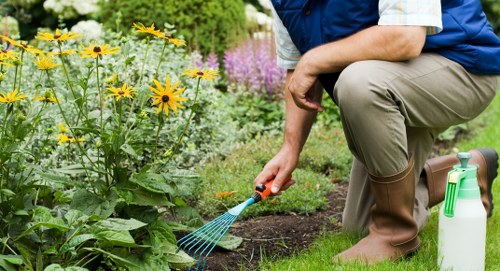
It is not always obvious at first that your garden has a drainage issue. Some signs appear after heavy rain, while others are easier to spot over time. If you’re unsure whether you need professional help, watch for the following:
- Standing water on lawns, patios, or paved areas
- Mud that stays soft long after rainfall
- Plants that struggle because roots remain too wet
- Green algae, moss, or slippery patches on paths
- Runoff flowing toward the house or adjoining structures
- Sunken or uneven areas where water collects
- Bad odours from oversaturated soil or blocked drainage routes
Some gardens in Kings Cross also experience drainage issues after landscaping work, new paving, or changes to ground levels. Even small alterations can affect the way water moves across the site. A new patio, raised planter, or boundary wall can unintentionally trap water, especially if the area was already prone to poor drainage.
If these problems sound familiar, it’s worth arranging an inspection before the issue gets worse. Early intervention can often prevent damage to turf, plants, paving, and sub-base materials.
Our garden drainage services

Every property is different, so the service needs to be tailored to the site. A proper drainage solution may involve one or more of the following approaches, depending on your garden and the type of problem you are facing.
Surface water drainage
Surface water systems are designed to deal with rainwater sitting on top of hard landscaping or open ground. These can include channels, channels connected to soakaway features, or other collection points that direct water away before it causes standing puddles.
French drains and land drains
A French drain or land drain can be useful where excess water builds up in lawned areas or planting beds. These systems work by collecting water below the surface and moving it along a graded route to a suitable outlet or soakaway. They can be especially useful in gardens that stay wet for long periods or sit on heavy clay soil.
Soakaways
Soakaways allow water to disperse gradually into the surrounding ground. They are often part of a broader drainage plan and can be a practical choice where space is limited and the site conditions are suitable. In compact Kings Cross gardens, careful planning is essential to ensure a soakaway is sized and placed correctly.
Regrading and ground levelling
Sometimes the issue is not the drainage system itself but the way the garden slopes. Regrading the ground can help direct water away from problem areas and toward an appropriate drainage route. This is particularly helpful if water repeatedly gathers in the same low spot.
Drainage for patios, courtyards, and paved spaces
Paved gardens and courtyards often need a different approach from lawns. We may recommend installing discreet linear drainage or adjusting falls across the paving so that water does not sit against walls, thresholds, or seating areas. This is especially important in tightly enclosed outdoor spaces where runoff has nowhere else to go.
Whatever the layout, the aim is the same: to create a drier, safer, and more usable outdoor space that suits the property long term.
How the service works
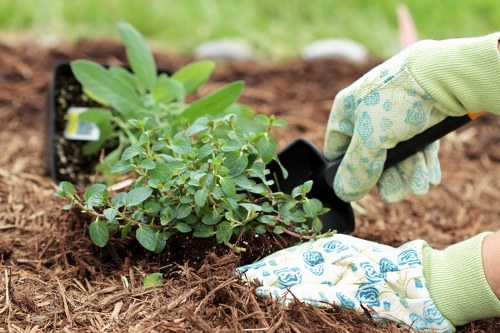
Customers often want to know what happens when they book garden drainage work. The process should be straightforward and transparent, with the plan shaped by what your property actually needs. While every project differs, a typical service may include the following steps:
- Initial assessment – We look at the affected area, identify where the water is collecting, and consider the surrounding ground and structures.
- Drainage diagnosis – We determine whether the issue is caused by soil conditions, poor falls, blocked routes, over-compacted ground, or a need for added drainage capacity.
- Solution planning – Based on the site, we recommend a suitable option such as a French drain, soakaway, channel drain, or regrading work.
- Preparation and excavation – The area is prepared carefully, with attention to access, neighbouring boundaries, and existing landscaping features.
- Installation – The chosen drainage components are installed to direct water away effectively.
- Finishing and reinstatement – We restore the affected area as neatly as possible, whether that means backfilling, relaying turf, or preparing a surface for replanting or paving.
In Kings Cross, access can be one of the biggest factors in planning. Narrow side passages, shared entrances, limited parking, and nearby traffic can all affect how equipment and materials are brought onto the site. A local team is used to working around those conditions and planning the job so disruption is kept to a minimum.
Good communication matters too. You should know what is being done, why it is being done, and how it will affect your garden during the work.
Why a local Kings Cross team is useful

Choosing a team with local experience can save time and reduce hassle. Garden drainage in Kings Cross often involves more than digging a trench and fitting a pipe. The property type, surrounding surface levels, and access conditions all need to be considered. A local company is more likely to understand common site challenges in the area, including compact urban plots, mixed-age housing stock, and courtyards that share drainage responsibilities with neighbouring properties.
Nearby areas such as Bloomsbury, Camden, Islington, Farringdon, Clerkenwell, St Pancras, and Somers Town can all present similar drainage concerns, especially where outdoor space is limited and hard surfaces dominate. That local context matters when deciding how to move water away without affecting adjoining spaces or existing structures.
Local knowledge can also help with logistics. Limited parking, loading restrictions, delivery coordination, and access timing can all affect how smoothly a project runs. A team familiar with Kings Cross will be better prepared to handle these practical details and minimise disruption for residents, tenants, staff, or customers.
What is included in a typical drainage project
When people enquire about drainage work, they often want to know exactly what the service includes. While the final scope depends on the site, a typical project may involve:
- Site inspection and drainage assessment
- Discussion of the problem areas and possible solutions
- Advice on whether the issue is best treated with drainage, ground levelling, or a combination of both
- Careful excavation in the relevant area
- Installation of drains, soakaways, channels, or associated components
- Backfilling, reinstatement, and tidying of the working area
- Options for working around existing paving, lawns, beds, or edging
In some cases, drainage work is combined with landscaping improvements. For example, a garden redesign may include new paving, raised beds, lawn restoration, or improved edging once the drainage problem has been solved. This can be a smart way to improve both function and appearance at the same time.
It is usually better to solve the underlying water issue before investing in new finishes. Otherwise, a new lawn or patio may suffer the same problems as the old one.
What affects pricing for garden drainage?
People often ask about cost early in the process, and it’s a fair question. The price of garden drainage work depends on the details of the site rather than a standard rate. Key factors that affect cost include:
- The size of the area that needs work
- How severe the drainage issue is
- Whether excavation is needed
- The type of drainage solution required
- Ground conditions, such as clay soil or compacted subsoil
- Access difficulty and how materials can be brought in
- Whether existing paving, turf, or planting needs to be lifted and reinstated
- Any additional landscaping or remedial work required after drainage installation
In Kings Cross, access and working space can be particularly relevant. A small courtyard with restricted entry will usually require a different approach from a larger rear garden with easy side access. Similarly, if the drainage problem affects a communal or commercial outdoor space, the scheduling and setup may need extra planning.
For that reason, the most useful next step is usually a site visit or a clear discussion of your problem area. Request a free quote so the drainage approach can be matched to your property rather than guessed from a photo alone.
Preparing your garden for drainage work
A little preparation can help the project run more smoothly. Before the work begins, it’s useful to think about access, valuables, and anything that might need to be moved. Here is a simple checklist:
- Clear access routes where possible, especially side passages and gate entrances.
- Move garden furniture, pots, ornaments, and small storage items out of the work area.
- Let us know about any underground services, irrigation pipes, lighting cables, or hidden features.
- Identify sensitive planting that you would like protected if possible.
- Arrange parking or loading access if your street has restrictions.
- Tell neighbours or building management if the work may affect shared space or access points.
If your garden is small or access is limited, don’t worry — that is common in Kings Cross. The important thing is to plan the work carefully and set expectations clearly. A tidy setup and sensible sequencing can make a big difference, especially in compact urban gardens where every metre matters.
Once drainage work is complete, the space may need a short settling period before final landscaping or replanting. This depends on the type of installation and the state of the ground beforehand.
Residential and commercial drainage solutions
Garden drainage in Kings Cross is not just for private homes. We also help with outdoor areas attached to offices, hospitality venues, managed developments, schools, rental properties, and other commercial or shared spaces. Each setting brings different priorities.
For homeowners
Residential customers usually want their garden to be dry enough for everyday use, safe for children and pets, and easier to maintain. In a smaller London garden, even a modest improvement in drainage can make the space feel much more practical.
For landlords and property managers
Drainage issues can become ongoing maintenance problems if they are ignored. A wet courtyard or waterlogged back garden may also create complaints from tenants or add pressure to future repair budgets. Addressing the issue properly can reduce repeat callouts and help protect the condition of the outdoor area.
For commercial premises
Customer-facing spaces need to look presentable and remain safe. Puddling on walkways, slippery surfaces near entrances, and unattractive standing water in an outdoor seating or break area all reflect badly on the property. Drainage improvements can help the space function more reliably in wet weather.
In every case, the job is about making the space work better for the people who use it.
Areas covered around Kings Cross
Drainage needs in Kings Cross often overlap with nearby neighbourhoods and transport-connected districts where properties share similar ground and access conditions. Work is commonly requested in and around:
- Bloomsbury
- Camden
- Clerkenwell
- Islington
- St Pancras
- Somers Town
- Farringdon
- Holborn
These areas include terraces, mansion blocks, mews-style properties, converted buildings, modern developments, courtyards, and mixed-use premises. That mix means drainage problems can vary quite a bit from one street to the next. Some places need help with lawn saturation, while others need better management of runoff from paving and roof water entering the garden zone.
If you are just outside the immediate Kings Cross area, it is still worth getting in touch. A local team can usually advise whether the site is suitable for a drainage solution and how best to approach the work.
Frequently asked questions
How do I know whether I need garden drainage or landscaping changes?
If water is sitting in the same place repeatedly, the first step is to understand why. Sometimes the fix is a drainage system. In other cases, the ground levels are the main issue and regrading is needed. Often, a combination of both works best.
Can garden drainage be installed in a small Kings Cross courtyard?
Yes. Many urban gardens have limited space, but that does not mean drainage improvements are impossible. Slimline channels, discreet soakaways, or below-ground drainage routes may be suitable depending on the layout.
Will drainage work damage my existing lawn or patio?
Some disturbance is often unavoidable if excavation is required, but the extent depends on the solution chosen. The area is assessed first so that any disruption is kept as targeted as possible. If you have a well-established lawn or valuable planting, that can be considered during planning.
How long does garden drainage installation take?
That depends on the size of the area, the amount of excavation needed, and whether reinstatement is included. Smaller jobs can be relatively quick, while larger or more complex sites may take longer. A proper assessment will give a clearer idea.
Do I need to be home during the work?
It is usually helpful for someone to be available at the start so the plan can be confirmed, but the level of presence needed depends on the project and access arrangements. If the site is in a managed building or shared property, coordination may be arranged in advance.
Can drainage help with water coming from a neighbour’s property?
Sometimes, yes. If runoff is entering your garden from elsewhere, the solution may involve intercepting the water, adjusting levels, or adding a suitable drainage route. The exact approach depends on where the water is coming from and how the site is laid out.
Is garden drainage only needed for wet weather?
No. While the problem often becomes obvious in rain, poorly drained soil can affect planting, cause root stress, and create long-term maintenance issues even between storms. Fixing it can improve the garden all year round.
Choosing the right drainage solution
There is no single answer that suits every garden. The right solution depends on whether the problem is caused by poor soil permeability, surface runoff, incorrect levels, blocked routes, or a combination of all four. In some cases, a simple adjustment is enough. In others, a more detailed drainage setup is needed.
That is why proper inspection matters. A good installer will look at the whole picture rather than focusing only on the wet patch you can see. They will consider where the water is entering, how it is moving, and where it can be released safely. This can save time, reduce unnecessary work, and improve the chance of a lasting result.
When drainage is designed around the actual site, the garden becomes easier to live with. Lawns recover more quickly, paths stay safer, and planting beds are less likely to suffer from persistent saturation.
Signs a solution may need to be more detailed
- The garden floods after even moderate rainfall
- Standing water appears in more than one part of the site
- The garden borders a basement area or lower wall
- Hard landscaping directs water toward the property
- Previous drainage attempts have not solved the issue
Why choose a professional service for garden drainage in Kings Cross?
Drainage work may look simple on the surface, but good results depend on careful planning, correct fall calculations, suitable materials, and an understanding of how water behaves in urban gardens. A professional service offers practical experience, proper site assessment, and an approach that takes the whole property into account.
That matters in Kings Cross because many gardens here are not straightforward. They may be enclosed by neighbouring walls, shaped around extensions, affected by older construction, or tied into shared drainage features. Working with a team that understands those challenges can make the process smoother and the end result more dependable.
It also helps to have one team managing the issue from start to finish. That means less confusion, clearer recommendations, and a better chance that the final outcome fits the way you actually use the space. Whether you want a healthier lawn, a dry patio, or a more maintainable outdoor area, the right drainage plan can transform day-to-day use.
Book your service now if you want to move forward with a site assessment or talk through the best options for your garden.
Get started with garden drainage in Kings Cross
If your garden is regularly waterlogged, slow to dry, or difficult to use after rain, it’s worth dealing with the problem sooner rather than later. The right drainage solution can protect your outdoor space, improve safety, and make maintenance easier throughout the year. From small courtyard fixes to larger drainage improvements for residential or commercial properties, a local service can help you choose a sensible and effective approach.
We work with customers who need practical advice, clear planning, and a solution suited to the realities of urban outdoor spaces. If you are comparing options for garden drainage in Kings Cross, now is the right time to arrange an assessment and find out what would work best for your property.
Contact us today to discuss your drainage concerns, request a free quote, and take the first step toward a drier, more usable garden.